The Grid Is Your Bank.
Store your energy in the grid, draw it when you need it, and earn a credit if you produce a surplus each billing cycle. Going "Net Zero" means generating as much or more electricity as your home uses across a full year.

Net-Zero, By the Calendar Year.
Solar systems in Nova Scotia produce more energy in summer than in winter. Surplus kWh in any billing period are banked and applied to your next bill until the end of the year. Any excess generation remaining at year-end credits any consumption within the same calendar year, up to the total billed energy.
That is how a "Net-Zero" home works in NS. You generate as much as you use across a year, regardless of when it is produced or consumed.
Power Rates Will Keep Climbing.
Residential rates have increased 3.6% per year in NS for the last decade, and NSP is unlikely to break the trend. At that pace, today's $0.185/kWh becomes $0.535/kWh within 30 years. A constant 13,500 kWh/year home would see its monthly bill rise from $208.13 to $601.34 by 2056, an increase of 189%.
Monthly Energy Flow.
Green is the kWh credit you bank in summer to draw down in winter. Grey is the rare month you pull from the grid.
With Solar vs. Without.
Assumptions
- 10.6 kW system, 20 of our premium Bauer 530W TopCon panels paired with cutting edge IQ8H microinverters
- 180° azimuth, 6/12 pitch
- $26,450 system cost, taxes included (2026 pricing)
- 3.6% annual increase in NSP residential power rates
- $0.185/kWh starting residential rate
- ~13,000 kWh annual household consumption
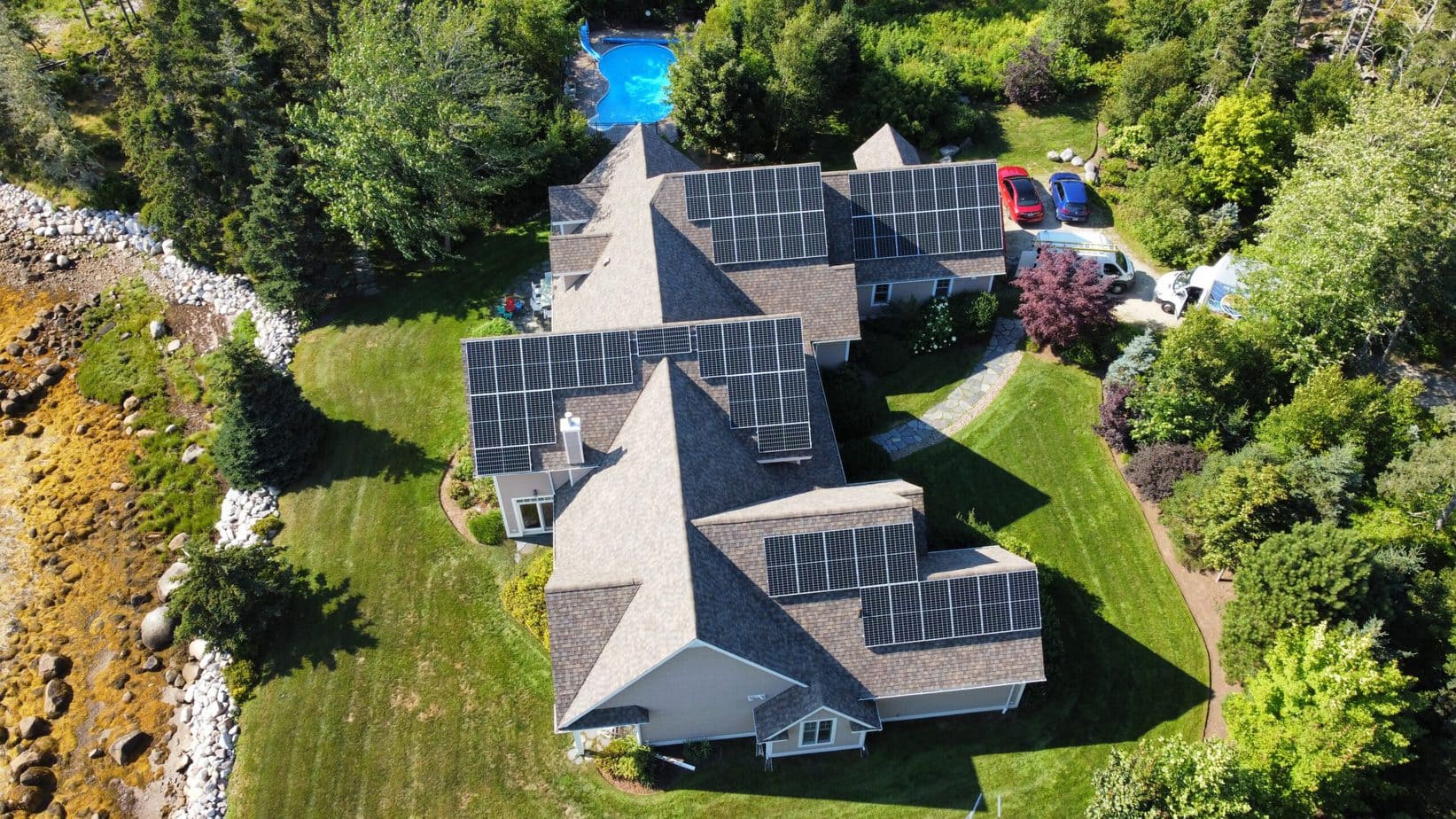
Our Cutting-Edge Design Process.
Three things together explain why your Watts Up system will produce close to what we said it would.
We use our own custom-built software to perform advanced 3D performance modelling at your property — precision that's impossible to match with off-the-shelf tools.
Our algorithms model every single day of the year, accounting for surrounding trees, buildings, and seasonal sun paths. The result is optimal panel placement and maximum energy production.
Our database of real performance data from 46,232 installed panels weights every prediction we make. A dataset competitors can't replicate without years of installation history.
Every design is backed by actual performance data from installed systems across Nova Scotia. Your system will produce close to what we said it would — not a manufacturer-spec fairy tale.
What Can I Produce?
Solar systems in Nova Scotia can produce up to 1,300 kWh per kW DC annually. System performance depends on the direction, slope and shading impact of the solar panels. A 10 kW (DC) solar system with good characteristics can produce around 12,000 kWh each year which is worth around $2,220.00 at 2025 electricity rates ($0.1850).
Our SystemsHow much can I save?
It all depends on the size of your system. With a large enough system you can completely eliminate your power bill as we have done for many of our customers. All you will be left with is the grid connection charge of $19.17/month.
CalculatorWhat Happens If I Produce A Surplus?
Excess energy will be stored in the grid and purchased by NSP to be used by your community. If you produce more than you use in a billing cycle NSP will use those kWh to credit your consumption in other billing cycles of the same calendar year. Annual excess energy is not purchased or credited by NSP on agreements dated after April 22nd 2022.
What Is The ROI
The vast majority of solar PV systems in Nova Scotia pay for themselves in power production in under 12 years providing an annual return on investment of 7 - 12%. You can expect for your solar system to have paid for itself up to 3X over within the warrantied lifespan of 30 years.
What About My Home Value?
Ready to sell your home? Installing a solar system makes it more salable, easier to mortgage, and increases the value of the home.
Our ReviewsWhat If The Rate Goes Up?
Unlike anyone without a solar system you may even be happy to see the power rates increase! It means you will see a shorter return on your investment because your cost avoidance has increased.
Self-Generating Option
Effective April 22, 2022, amendments made to the Electricity Act (Bill 145) have removed remuneration for annual surplus energy, i.e. energy "self-generated" above and beyond the electrical consumption in a calendar year.Read more: NSP Self-Generating Option
How Does It Work?
The Self-Generating Option lets you offset your electricity consumption with clean solar energy while staying connected to the grid for reliability and convenience. The grid acts as your battery. You push power up when the sun's out, draw it back when it isn't.

All Self-Generating customers continue to pay their monthly base charge as usual, and business customers continue to pay demand charges. If you use more electricity than you generate, you still draw from the grid as needed and receive a bill for the difference at your regular rate. If you generate more electricity than you can use, surplus kilowatt-hours (kWh) will be "banked" and applied to your next bill to offset any electricity drawn from the grid until the end of the year. If you end the year with excess generation remaining, NS Power would apply this to any billed consumption within the same calendar year up to a maximum of your total billed energy within the same calendar year.
No. Your generator must share the same meter as your home or business and energy credits can only be applied to the same account in which the generator is connected to.
The Self-Generating Option works by using a single meter capable of registering the flow of electricity in two directions, known as a bi-directional meter. This meter is approved by Measurement Canada and meets NS Power's safety standards. If your existing meter is not capable of measuring the flow of electricity in two directions, one will be installed for you at no cost.
All Self-Generating Customers will have an Anniversary Date of January 1 of any given year. This is the date that any excess "banked" surplus kilowatt-hours (kWh) will be applied towards previously billed energy (kWh) within the same calendar year.
During billing periods when your generation is less than your consumption (typically during the colder winter months when your energy consumption may be higher and generation may be lower), you would receive a bill for the energy consumed above your generation.
However, when your generation is greater than your consumption (typically during the warmer months when your energy consumption may be lower and generation may be higher), you would bank any excess generation for later use throughout the year.
If you end the year with excess generation remaining, NS Power would apply this excess generation to any billed consumption within the same calendar year up to a maximum of your total billed energy within the same calendar year.
Example 1:
If you were billed for 2,500 kilowatt-hours throughout the year when your generation was less than your consumption and you had 2,000 kilowatt-hours of banked excess generation remaining at year-end, NS Power would provide a credit for 2,000 kilowatt-hours to offset your billed consumption.
Example 2:
If you were billed for 2,500 kilowatt-hours throughout the year when your generation was less than your consumption and you had 3,000 kilowatt-hours of banked excess generation remaining at year-end, NS Power would provide a credit for 2,500 kilowatt-hours* to offset your billed consumption.
If you participate in the Self-Generation Option and are on the time-of-day rate, we will measure any electricity consumed from or delivered to the grid within the same time-of-day periods used for billing purposes. You will be billed and credited for consumption and excess generation by each time-of-day period without the transfer of surplus energy from one time-of-day period to another (from one rate to another). If you end the year with excess generation remaining, NS Power would apply this excess generation to any billed consumption (kWh from all time-of-day periods) within the same calendar year up to a maximum of your total billed energy within the same calendar year.
No. Your generator must share the same meter as your home or business.
You can easily access the total the number of kWh used over the course of the year, or alternatively sum up the totals for past electric use for the most recent year on right-hand side of your bill.
Safer, more reliable batteries
Enphase IQ Batteries are the first microinverter-based storage system to meet the performance criteria of the UL 9540A—a unit-level test for thermal runaway fire propagation protection in residential indoor wall-mounted systems.
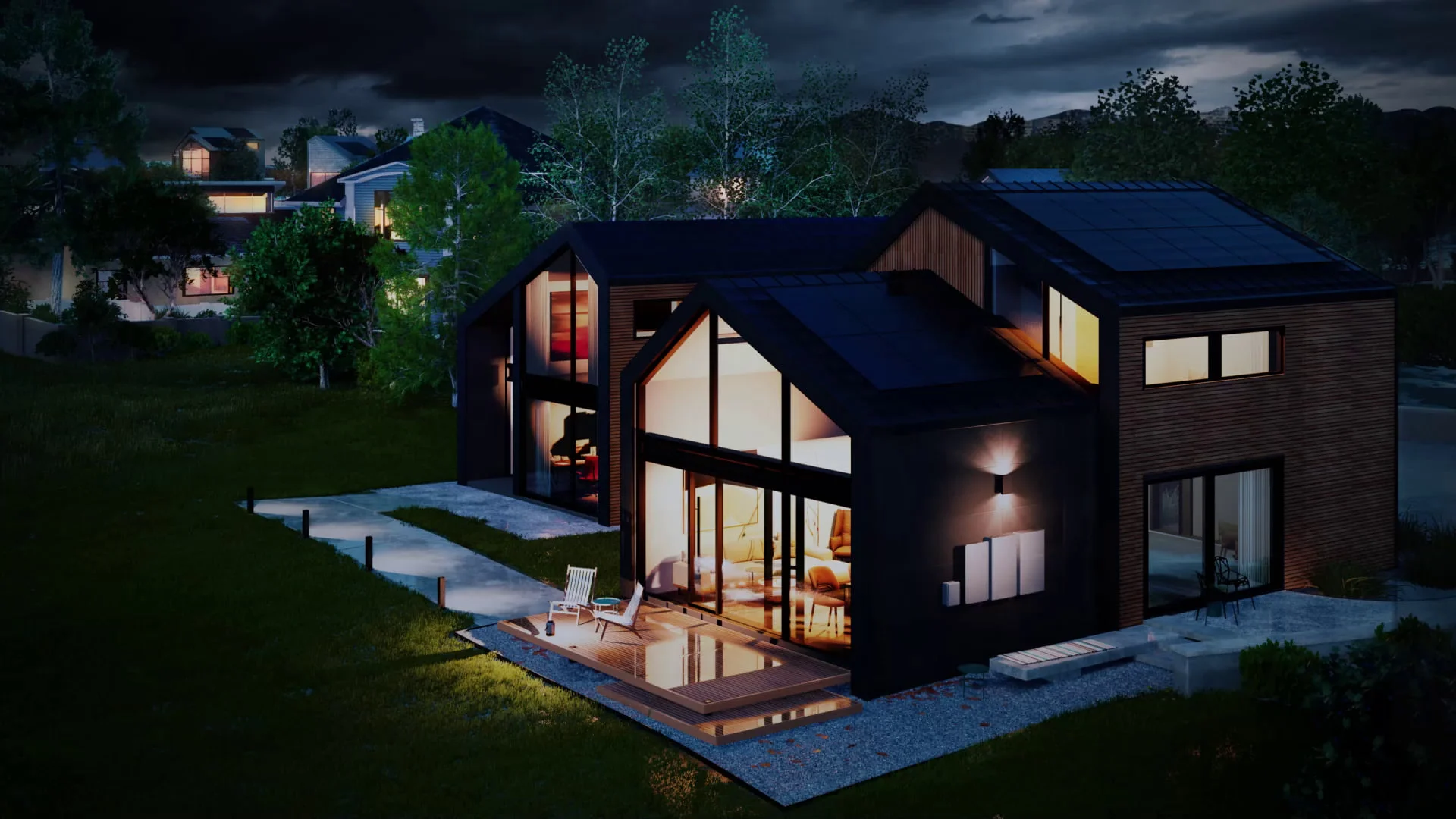
What happens when the grid goes down?
A typical net metered solar system without additional components will cease to produce power when the grid is not active.
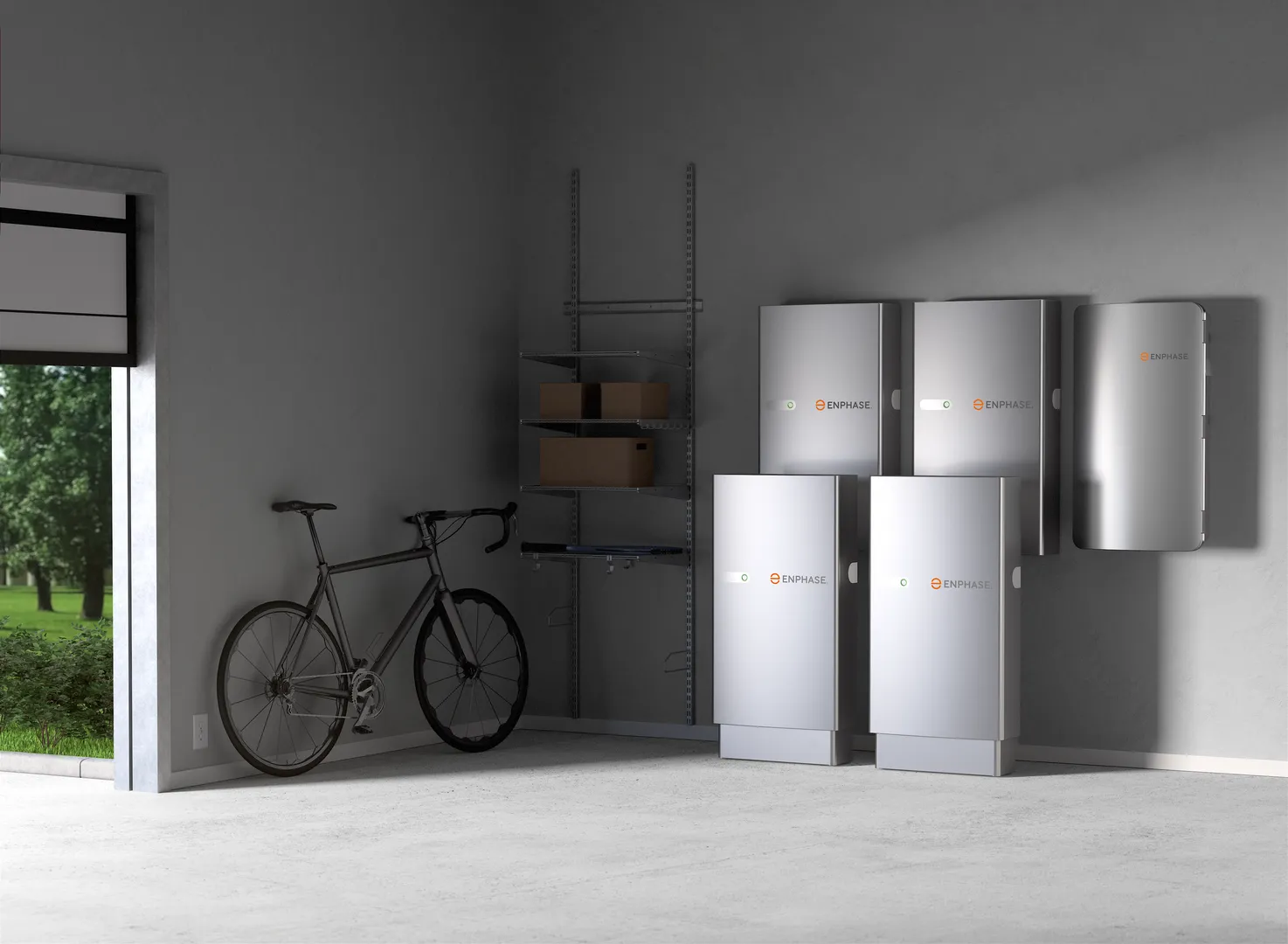
Low voltage, high safety
Enphase IQ Batteries operate with low-voltage DC power, avoiding the dangers that come with high-voltage DC power.
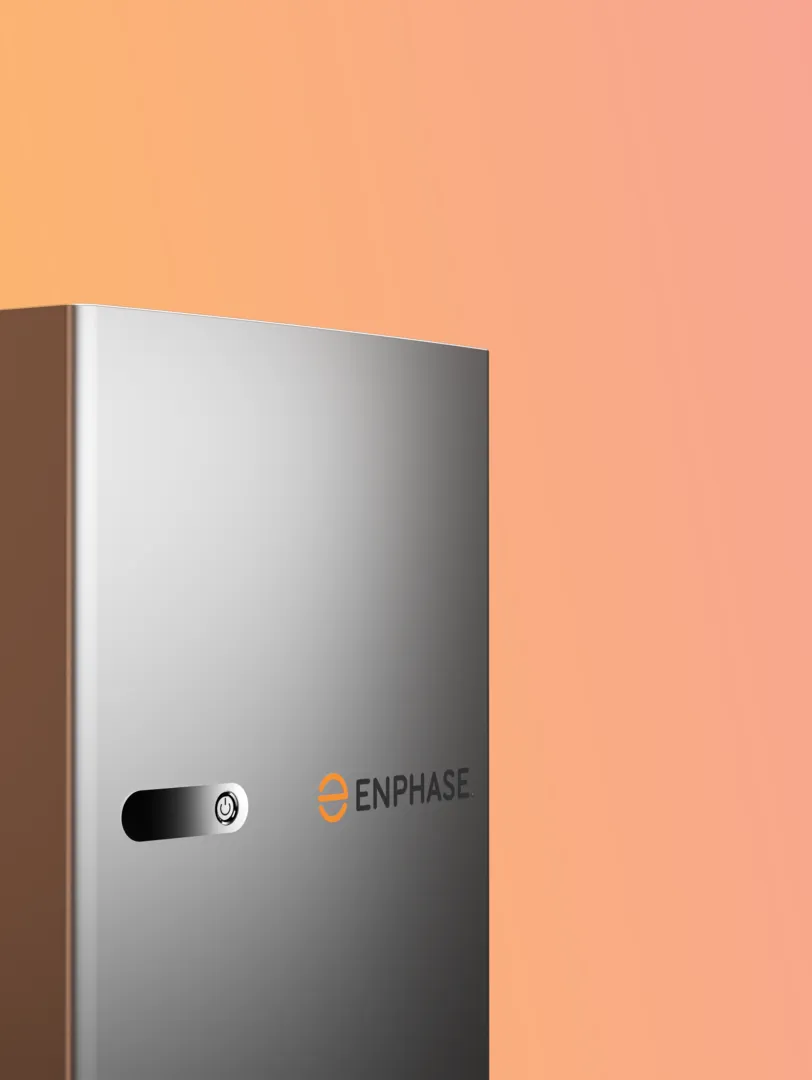
The Enphase Difference
Enphase offers a unique solution with their System Controller. It forms a microgrid and monitors house loads on a microsecond scale, delivering power as needed from individual inverters, eliminating the need for batteries as overflow.
Learn more
Check out our advanced solar calculator
Learn what a top quality solar system can do for you
- Discover this year's equipment lineup and learn about storage options,
- Design your solar system with unlimited arrays,
- Model your system's performance over 30 years and track kWh purchases, credits and production,
- Compare every available financing route — Halifax Solar City, Clean Energy Financing, SwitchPACE, and the Clean Technology ITC,
- Discover your total cost for a top quality PV system as well as your ROI, payback period, new monthly power bill and your enviromental impact.
If you would rather just request a quote, click here to fill in our contact form.
So, thinking about solar? Let's talk
The quickest way to get a quote is to fill in our contact form.
Get in touch